
Our first citizen science project:
tracking plastic on a beach in Ahangama, Sri Lanka
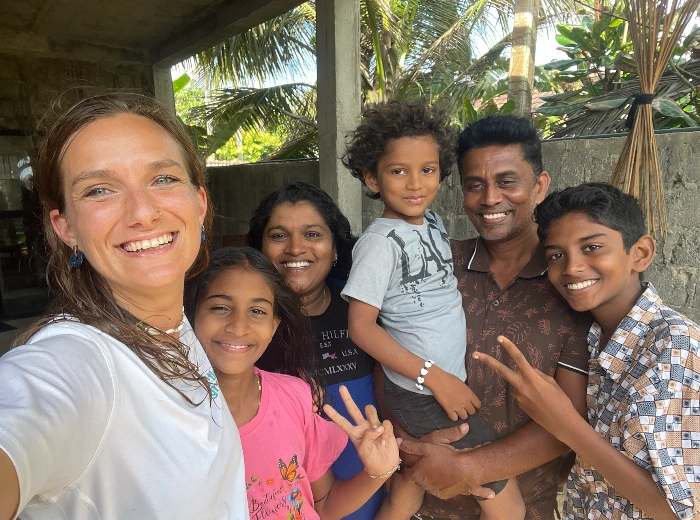
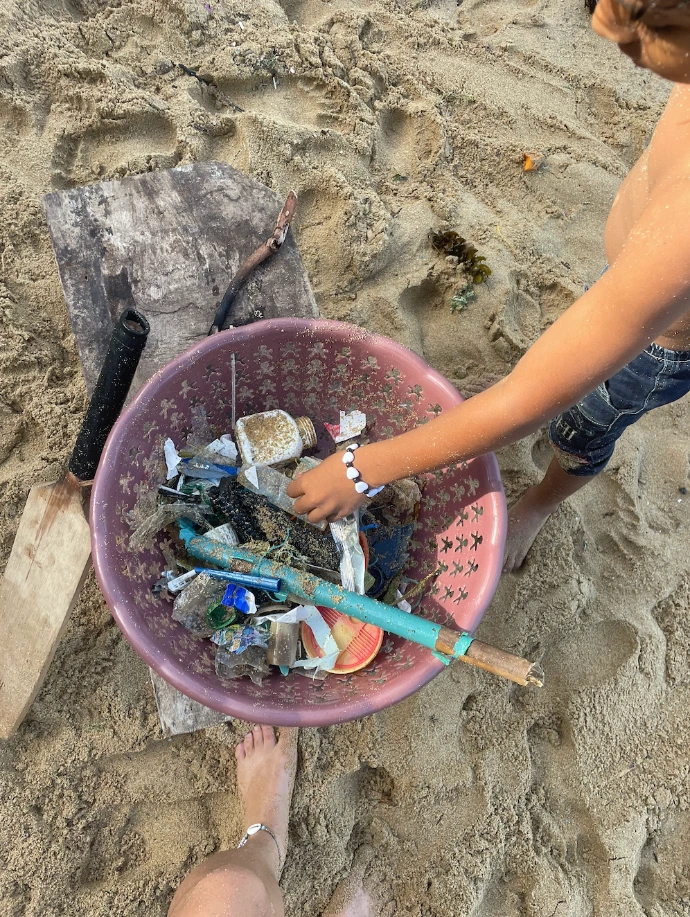
Turtlee Green has launched its first citizen science project together with Keerthi and his family in Ahangama, Sri Lanka. Over several weeks, the family recorded the plastic they collected from their stretch of beach. In just 26 days of clean-ups, they logged more than 500 litres of plastic.
Why this project?
During our travels through Sri Lanka, we stumbled upon a charming little café, where we were warmly welcomed by Keerthi and his family. We soon discovered that their beautiful café had its very own little beach right in front of it. What we didn’t realise at first, however, was that along the coast of Ahangama, plastic continuously washes ashore, turning this beautiful stretch of coastline into a place that faces an ongoing battle with pollution.
It was the first time I had ever seen plastic washing ashore in such quantities. Going for a swim, I found myself swimming through plastic. It was heartbreaking, especially knowing that this beach is also home to sea turtles. In fact, we were lucky enough to spot our very first turtle here. We were told that five turtles regularly live in this area. Seeing such beautiful wildlife share the same waters with so much plastic really puts the problem into perspective.
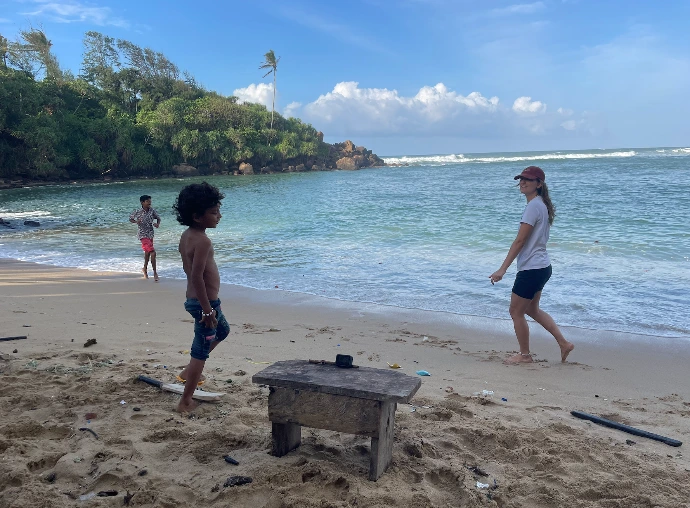
The impact of the pollution was also impossible to ignore on land. We spent time playing cricket with the family, and sometimes found ourselves running straight over piles of plastic scattered across the beach. For Keerthi and his family, this is simply part of everyday life. What was shocking for us as visitors, is something they have to deal with every single day.
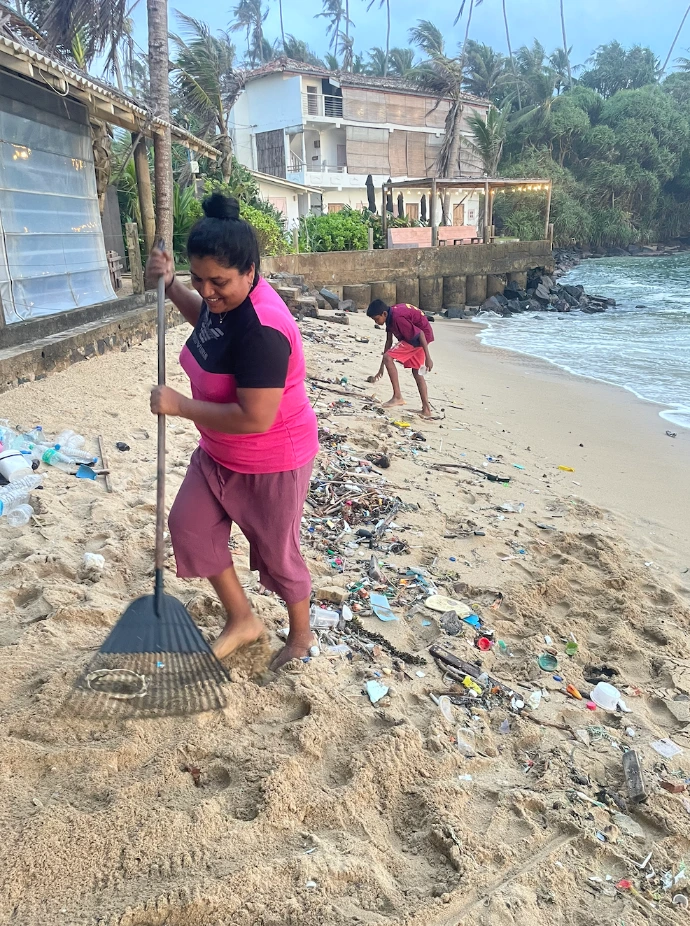
Keerthi and his family clean the beach every morning at 6 AM and again in the evening. Yet, within a day, much of the plastic has returned. Their section of beach also shows a clear pattern: one part stays polluted while the other remains comparatively clean. This suggests that local currents largely determine where the waste ends up.
And, unfortunately for Keerthi, it is right in front of their beautiful family-run café.
The family has no waste collection or recycling system to rely on, so the collected plastic is burned. Their daily effort is real and substantial, but until now, it had never been measured. Without data, the scale of the problem remains largely invisible to the people and organisations who could help address it.
Our approach
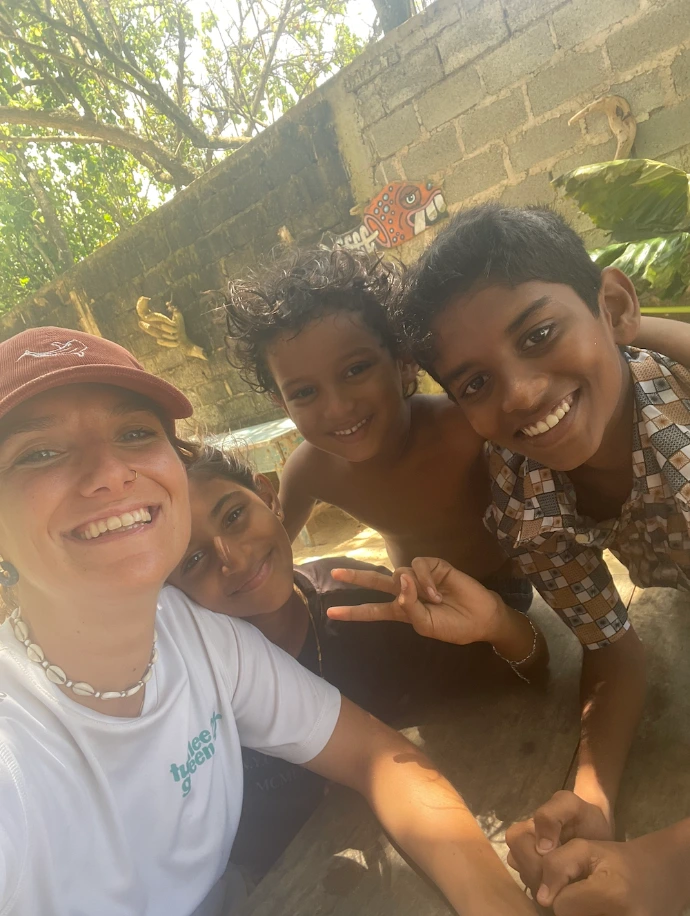
Citizen science is all about giving people who experience a problem firsthand the opportunity to help document it. Keerthi and his family do exactly that.
Every time they collect plastic from the beach, they record how much they have gathered, using bag sizes of 5, 10, 25 and 50 litres. They also note the date and any observations that might be worth sharing. This information is then shared with Turtlee Green.
The beauty of this approach lies in its simplicity. No special equipment or complicated processes are needed. It simply becomes part of a routine the family already follows. And, perhaps most importantly, the people who know this beach best are the ones helping us understand what is happening to it.
First results
(21 August to 25 September 2026)
Over the first recording period, Keerthi and his family collected some interesting data:
528.6 litres of plastic recorded across 26 days of clean-ups.
200 litres on the first day, 21 August, equivalent to four 50-litre bags.
Weekly totals fell from 250 litres in the first week to 117 litres, then 71 litres, and finally 5.6 litres in the week of 10 September.
A rebound of 50 litres on 19 September, the first day recorded after a short break in logging between 14 and 18 September.
These first numbers already give us a glimpse of how much plastic can accumulate on just one small stretch of beach.
What these results can and cannot tell us
These are early, informal results, and we want to be transparent about their limitations.
First, the initial days of recording probably include plastic that had built up before the counting began, as they were away for several days. This means the early figures are unlikely to represent a typical day of plastic washing ashore.
Second, the recording period is still relatively short and covers only part of the year. Keerthi's family told us that the amount of waste depends heavily on wind and season, and that it usually eases in December and January. A longer series of observations will help us understand these seasonal patterns.
The weekly decline in recorded plastic is particularly interesting, but it doesn't necessarily mean that less plastic was washing ashore. Weather conditions, wind direction, tides and ocean currents can all influence how much plastic reaches this particular stretch of beach. It is therefore possible that the decline reflects changing weather and sea conditions rather than an actual reduction in plastic pollution.
There is also a gap in the data between 14 and 18 September, so the increase recorded on 19 September needs to be interpreted with that in mind.
Finally, the data currently measures weight rather than volume or the type of plastic collected. These additional details could help us build a more complete picture of the pollution over time.
In other words, these first results are not yet telling us the whole story. But they are giving us a starting point.
What comes next?
We plan to keep the project running over the coming months so that we can build a longer record and better understand how plastic pollution changes with the seasons, weather and ocean conditions.
We would also like to share the findings with local partners and organisations working on waste management solutions along the coast. Over time, we hope the data can help make the problem more visible and support better-informed local action.
Above all, this project exists because of Keerthi and his family. They showed us the problem, and they are the ones doing the work and collecting the data day after day.
We believe that meaningful change starts with understanding a problem. And sometimes, that understanding begins with something as simple as counting a few bags of plastic on a beach.